

The Plot: A talented piano tuner’s meticulous piano-tuning skills lead him to discover an unexpected aptitude for cracking safes, turning his life upside down.
Niki White: The Piano Everything!
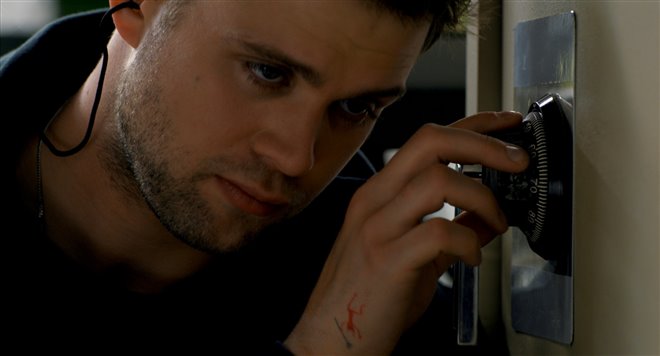 Niki is exceptionally skilled at repairing pianos; he is a true connoisseur of the instrument. His talents in playing, tuning, and fixing pianos are evident within the first 30 minutes of the film. He soon encounters Ruthie, a highly experienced piano player who becomes his love interest.
When Niki repairs the piano at her school, where she practices daily in hopes of securing an apprenticeship with a renowned pianist, she challenges him. She asks Niki to close his eyes and identify the piece she is playing without looking. He responds without hesitation, demonstrating his deep understanding of music and chords, even sensing if she is trying to trick him.
Ruthie is so impressed by his abilities that she is left speechless after he fixes her piano. This moment highlights her initial prejudice against him, as she had judged him before truly knowing him. It underscores a key theme of the film: perception can be misleading. We often rely on our assumptions rather than seeking genuine understanding, a lesson Ruthie learns through her interactions with Niki. This dynamic sets the stage for the rest of the film.
Niki’s Hyperacusis
 Niki suffers from hyperacusis, a condition characterized by an increased sensitivity to sound and a very low tolerance for environmental noise. The film does not delve into how he was diagnosed with this issue, but it is evident that he wears headphones while working to drown out external sounds. Although he is not deaf and can hear, he struggles with noises that are medium to excessively loud.
To illustrate his experience, imagine being in a library where speaking must be done in whispers; this is akin to how Niki navigates his daily life, constantly aware of all sounds around him. His condition significantly impacts his ability to function normally in various environments.
Financially, Niki is not making a substantial income working with his acquaintance, Harry. When Harry forgets the combination to his safe, Niki decides to learn how to crack safes. This raises an intriguing question: did he pursue this skill to assist Harry, or was it motivated by his own interests, knowing it could lead to quick and potentially illegal cash? This moral ambiguity adds depth to Niki’s character and invites the audience to ponder his true intentions.
Israeli Thieves
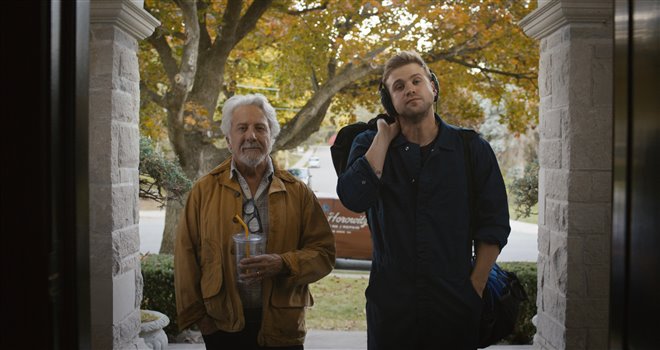 Niki was acutely aware of the risks he was taking when he agreed to work with these thieves. He constantly asked them questions after accepting Uri’s offer, becoming increasingly entangled with thugs and criminals. All he saw was the allure of quick cash, indifferent to the morality of his actions. His focus was on cracking safes, often peeking inside, and getting paid for a skill he had honed. However, his true passion lay in playing the piano, not in aiding criminals in their thefts, regardless of their victims’ social status.
Theft is theft, and wrong is wrong—there’s no gray area. Every decision we make carries consequences, which may not be immediate but are inevitable. The film’s conclusion was masterfully executed, resonating with symbolism that encapsulated the narrative’s essence. To truly grasp its meaning, one must watch it with an open heart, ready to “hear” the deeper messages conveyed.

This was by far one of the best date movies of the year. Being a low-budget and independent movie, it was surprisingly good. The only known stars that probably most of the budget went to were Dustin Huffman and Jean Reno. I agreed with you that Niki knew the risk in working with the Israeli thugs, but sometimes you’ve got to do what you’ve got to do even if we don’t agree with it.
Thanks for leaving this comment for me. I want to say that I have seen a movie or two with the girl who played the character of Ruthie. I might be mixing her up with Maggie Q to be brutally honest. Lol.
This was a great movie! Dustin Hoffman was a joy to watch on the big screen again.
I definitely agree! The iconic actors NEVER go out of style for me!
Absolutely loved this film. One of the best in a long time. And it was a smaller title. The casting was well done, story was really unique. Overall great film. Shows that you dont need a big budget or massive casting to be good. 5/5
Well put! I can’t disagree with what you said! Sometimes it’s the low-budget films that actually do so well and go on to win Oscars!
Loving an understanding a craft/instrument brings an awareness and intelligence to a subject only certain people can attain, and the fact that this skill also allows him to understand sounds of different instruments is remarkable. It never ceases to amaze me when people do something they know could get them into trouble, because it comes to them so easy. Astonishing sometimes. A movie that reads really interesting, and encaptures the mind…what’s next!!
It made me think of the Italian Job with Charlize Theron and Mark Wahlberg.