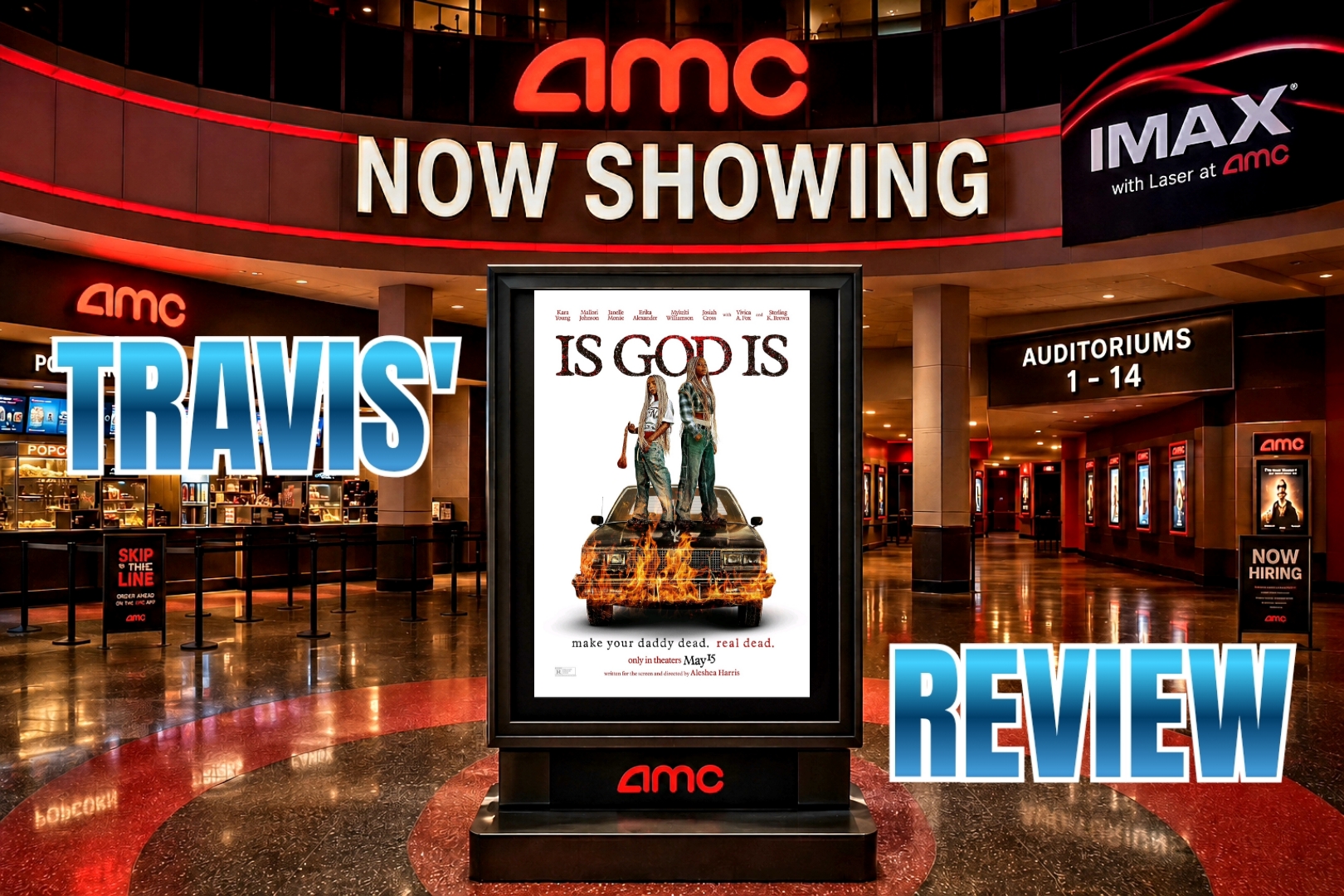
The Plot: Two sisters embark on an epic quest for revenge, confronting a charged family history that will push them to extraordinary lengths.
Sisters Racine & Anaia
 Of these 2 sisters, Racine is the stronger of the 2. They are bonded by a real sisterhood, and this is demonstrated from the minute the film opens. And that is strange. And one thing that strikes me as very odd about these two sisters is that they can read each other’s minds and speak to each other without saying anything. I’ve often heard that babies have their own sudden language and that twins, especially, can sense when the other is in danger, or that they can talk to one another even when they’re not in the same room or in a distant area. This type of “secret language” is called cryptophasia. I digress. It was weird seeing this sort of behavior coming from two grown young women. I did love the closeness that they had because how many siblings really love and respect each other in this day and age? We always hear about sibling rivalry and all that, so to see the sisterhood bond these girls had was satisfying to me.
Ruby The God’s Request
 The portrayal of a deity asking their children to commit such an act as murdering a parent is deeply troubling and raises significant moral questions. This aspect of the film is where I found myself in strong disagreement. The title, “Is God Is,” also left me perplexed; it seems to lack clarity and purpose.
Vivica A. Fox’s character, representing God, instructs her children to sacrifice their souls for a man who harmed them and their mother. This premise does not, in any way, justify or condone acts of cold-blooded murder.
I understand why many viewers might struggle with this film, as it distorts various interpretations of Christianity. It could potentially influence those who are vulnerable or not firmly grounded in their beliefs to misinterpret the film’s message as endorsing violence.
This particular narrative thread should have been reconsidered and rewritten to take a different direction, one that does not compromise ethical standards or the integrity of the characters involved.
The Father ‘aka’ The Monster
 People often lie, deflect, deceive, and manipulate facts. This is what their father attempted, or did he? Throughout the film, we only see glimpses of him—his mouth or him walking away—keeping his identity a mystery until the end. If you were in the sisters’ position, whom would you believe more: the mother, who explained what happened and why they were hurt, or the father’s side? It’s a difficult choice, as both have fabricated facts, making it hard to trust either one.

So, you pretty much agree with my overall assessment of the movie?
Thanks for the great detailed review. I was completely disinterested in this movie… And still believe I will not go to see it. Just not my type of entertainment. Thanks for saving me the ticket.
I think that you are dodging a bullet seriously! I mean, should you see it on streaming? Maybe, yes, but to run out and watch it in theaters—no, not really.
I’ve been contemplating watching this flick. Just the title alone makes me struggle if I should. Based on the trailers and not really researching the film, kinda puts me off. I think I’ll probably catch it on streaming instead.
To be completely candid, considering your strong faith and commitment to God, I believe you may encounter some challenges with this matter. As I mentioned in my review, it is likely to be particularly difficult for Christians.
I’ve seen so many ads about this movie, and your review throws it all the way left of what I thought they were trying to portray, but I guess whatever they can do to get you in the movies, and you go is a win. That’s a movie I’ll have to see, just because. The father whose portrayals on TV screens is totally different than what his portrayal is in the movie. Do you think he nailed it??
Yes, Sterling K. Brown delivered an outstanding performance in this film, showcasing his remarkable talent and depth as an actor. However, it is quite unsettling how the movie portrays Christianity in a negative light, which raises concerns about the implications of such representations. The way the narrative intertwines faith with fear and negativity is alarming and could potentially influence viewers’ perceptions of religion. I am genuinely surprised that the film did not face significant backlash or controversy, as it touches on sensitive themes that could provoke strong reactions. It’s intriguing to consider how this film has managed to gain traction despite its contentious approach to such a profound subject.